
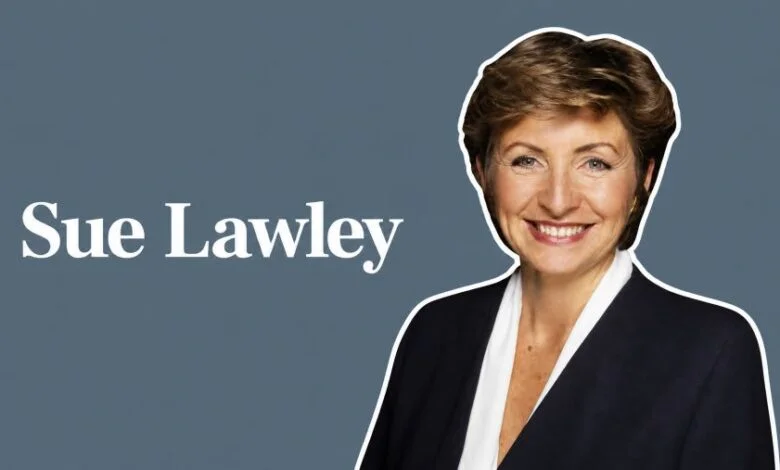
Sue Lawley is a well-known British broadcaster and TV show host who spent decades working across print journalism, current affairs television, national news, and radio. She became one of the most recognized faces on BBC screens through programmes such as Nationwide, the Six O’Clock News, and later through BBC Radio 4’s Desert Island Discs. Her career placed her at the centre of British public broadcasting for many years.
Her story carries both positive and challenging elements. On the positive side, she showed consistency, calm under pressure, and an ability to handle different broadcasting roles across a long career. On the challenging side, her interviewing approach was sometimes viewed as unusually direct, which created tension in certain interviews. However, that same directness also made her work serious and memorable for audiences across generations.
Quick Bio
| Field | Details |
|---|---|
| Real Name | Susan Lawley |
| Known As | Sue Lawley |
| Date of Birth | 14 July 1946 |
| Age | 79 years old |
| Birthplace | Sedgley, Staffordshire, England |
| Nationality | British |
| Profession | Broadcaster, journalist, newsreader, radio presenter, TV show host |
| Education | Dudley Girls High School; University of Bristol |
| Famous For | Nationwide, Six O’Clock News, Desert Island Discs |
| First Husband | David Ashby (solicitor) |
| Second Husband | Hugh Williams (former BBC executive) |
| Children | Two |
| Honour | OBE, awarded 2001 |
Early Life and Education
Sue Lawley was born on 14 July 1946 in Sedgley, a town in Staffordshire situated near Dudley in the West Midlands. She attended Dudley Girls High School, where she received a solid academic grounding before moving on to higher education. She later enrolled at the University of Bristol, where she studied modern languages. During her time at Bristol, she consciously adjusted her regional accent to adopt a more standard form of spoken English, recognizing that this would matter in a future broadcasting career.
Her academic background in languages gave her strong communication skills and an ability to engage across different subjects with clarity and confidence. These qualities became central to everything she later achieved as a broadcaster and TV show host at the national level.
Start of Career
Her professional life began in newspapers. Between 1967 and 1970, she worked as a trainee reporter at both the Western Mail and the South Wales Echo in Cardiff. This period gave her the essential foundations of journalism — sourcing stories, verifying facts, writing under deadline pressure, and understanding what audiences need to know. During this time, she shared accommodation in Cardiff with journalist Michael Buerk, who would himself later become a major figure in British broadcasting.
Following her newspaper work, she moved into broadcast journalism by joining BBC Plymouth in 1970, where she worked as a subeditor and freelance reporter until 1972. This regional posting was her entry point into the world of television, and it gave her practical experience in front of the camera at a local level before the national stage became available.
Rise Through BBC Television
Her route to national prominence came through BBC Nationwide, the popular early-evening current-affairs programme that ran from 1969 to 1983. She joined the programme in 1972 as a reporter and grew into one of its central presenting figures over the following years. Nationwide was a varied programme that combined serious political coverage with public interest stories, regional features, and direct engagement with viewers, and it required presenters who could move between these different tones without losing authority.
Her work on Nationwide established her reputation as a confident and capable broadcaster. In 1975, she was offered the lead anchor role on Tonight, a nightly BBC news programme, and went on maternity leave in 1978. On returning, she rejoined Nationwide as one of its two main anchors alongside Frank Bough, remaining with the programme until it concluded in 1983. Her long association with Nationwide is an important part of her broadcasting story because it gave her both national visibility and a strong professional foundation.
BBC News Career
After her years on current affairs television, she transitioned into national news presenting at the highest level. She began presenting the Nine O’Clock News from September 1983 and the following year became the lead anchor of the newly launched Six O’Clock News on BBC One, a role she held from its very first broadcast in September 1984.
These were among the most watched and most trusted news programmes in Britain at the time. Her presence on them added credibility and stability. Viewers associated her with calm authority, steady delivery, and professional reliability. The positive outcome of this phase was a strengthened reputation as one of the leading newsreaders in the country. The difficult reality was that live news presenting carries constant pressure, particularly when unexpected events unfold on air.
The most dramatic of these moments came on 23 May 1988, when protesters opposing Section 28 — legislation restricting the discussion of homosexuality in public institutions — entered the studio during a live broadcast and chained themselves to camera equipment and her desk. While co-presenter Nicholas Witchell physically restrained one of the protesters, she continued reading the news without interruption. Her composure throughout the incident drew widespread praise, and her closing words that evening became one of the most remembered sign-offs in British news television.
Desert Island Discs
One of the most significant chapters of her career began in 1988 when she took over as presenter of BBC Radio 4’s Desert Island Discs. She hosted the programme from its March 1988 edition until her final show in August 2006 — a tenure of eighteen years that brought her a different kind of public recognition.
Desert Island Discs invites notable guests to imagine themselves stranded on a desert island and to select the music, book, and single luxury item they would take with them. The conversation that surrounds these choices becomes a personal portrait of the guest. Hosting this programme well requires a presenter who can balance warmth with precision, allowing guests to speak openly while also asking the questions that listeners most want answered.
Her approach to the role was thorough and serious. She prepared carefully for each interview and was not reluctant to ask challenging questions even when her guests were celebrated or powerful figures. This approach occasionally created moments of discomfort, but it also resulted in interviews that felt genuinely revealing rather than merely promotional. In 1990, she published a book drawing on her conversations with Desert Island Discs guests. In 2002, she presented a special sixtieth anniversary celebration of the programme at the Royal Festival Hall.
Career Timeline
| Year / Period | Career Event |
|---|---|
| 1946 | Born in Sedgley, Staffordshire |
| 1967 – 1970 | Trainee reporter at Western Mail and South Wales Echo, Cardiff |
| 1970 – 1972 | Subeditor and freelance reporter at BBC Plymouth |
| 1972 – 1983 | Reporter and anchor on BBC Nationwide |
| 1975 – 1978 | Main anchor on BBC Tonight |
| 1983 – 1984 | Presenter of BBC Nine O’Clock News |
| 1984 – 1988 | Lead anchor of BBC Six O’Clock News |
| 1988 – 2006 | Host of Desert Island Discs on BBC Radio 4 |
| 2001 | Awarded OBE for services to broadcasting |
| 2006 | Stepped down from Desert Island Discs |
| 2017 | Stepped down from hosting BBC Radio 4 Reith Lectures |
| 2019 | Confirmed full retirement from broadcasting |
| 2023 | Briefly returned to present on BBC London |
Complete Career Overview
Her career covered a wider range of broadcasting formats than most of her contemporaries. She moved from regional newspaper reporting to local television, then to national current affairs, national news presenting, radio interviewing, and hosting prestigious lecture series. Very few broadcasters of any generation have worked successfully across all of these areas.
As a TV show host and broadcaster, she showed that it was possible to maintain long-term credibility without remaining fixed in a single role. Her time on Desert Island Discs demonstrated that a newsreader’s authority and discipline could translate powerfully into the very different demands of long-form radio interviewing. After leaving Desert Island Discs, she continued her association with BBC Radio 4 by introducing the Reith Lectures — the BBC’s annual series of talks by leading thinkers and public figures — a role she held for seventeen years before stepping down in 2017.
She was also a board member of the English Tourism Council and the English National Opera, showing a broader engagement with British cultural life beyond journalism and broadcasting.
Personal Life
Her personal life has remained largely private throughout her career. She was first married to David Ashby, a solicitor, in 1975, and the couple had two children together. She kept family matters away from the public eye and did not use personal publicity as part of her professional identity.
In 1987, she married Hugh Williams, a former executive at BBC TV News. This second marriage is documented in her public biography, but she has consistently maintained discretion about her private circumstances, which is consistent with the professional approach she brought to all areas of her working life.
Source of Income
Her income throughout her career came from work in broadcasting and journalism. This included her years in print media, her long run of television presenting roles at the BBC, her eighteen-year tenure on Desert Island Discs, and her subsequent work introducing the Reith Lectures. She also had involvement with public cultural organisations in board-level roles. Her career was built entirely within the media and public broadcasting sector rather than through commercial ventures or business activities outside journalism.
Awards and Recognition
Sue Lawley was awarded an OBE in 2001 in recognition of her services to broadcasting. This formal honour reflected the breadth and consistency of her contribution to British public media over more than three decades. Beyond official recognition, her standing within the industry and among audiences has always been based on professional respect rather than celebrity. Many viewers and listeners remember her for the quality of her work rather than for personal publicity, which is an unusual and meaningful form of recognition in itself.
Legacy
Her legacy in British broadcasting rests on several distinct contributions. She helped establish the credibility of women in senior presenting roles at the BBC during a period when those positions were predominantly occupied by men. She brought genuine journalistic rigour to Desert Island Discs and elevated the programme’s reputation as a serious space for personal conversation with public figures. She also demonstrated across decades that broadcasting excellence requires consistency, preparation, and a willingness to ask difficult questions regardless of the status of the person being interviewed.
Her career shows that lasting professional reputation is built through steady, disciplined work over many years rather than through single moments of fame. That is perhaps the most important part of what she leaves behind for the broadcasters and journalists who have followed her.
Conclusion
Sue Lawley remains one of the most important figures in the history of British broadcasting. She worked across newspapers, regional television, national current-affairs programmes, BBC news bulletins, long-form radio interviews, and prestigious lecture series. At every stage, she brought the same core qualities: clear communication, professional composure, and a deep commitment to the work.
As a broadcaster and TV show host, she helped shape the standards of British public media across several decades. Her story is one of steady professional growth, significant public contribution, and a lasting impact on how British audiences came to expect their news and interviews to be delivered.
FAQs
Who is Sue Lawley?
She is a retired British broadcaster, journalist, newsreader, and radio presenter who built a long career at the BBC across television and radio.
What is Sue Lawley’s real name?
Her full real name is Susan Lawley.
When was Sue Lawley born?
She was born on 14 July 1946.
Where was Sue Lawley born?
She was born in Sedgley, Staffordshire, England.
What is Sue Lawley famous for?
She is best known for presenting BBC Nationwide, the Six O’Clock News, and Desert Island Discs on BBC Radio 4.
Who is Sue Lawley’s husband?
Her second husband is Hugh Williams, a former BBC television executive. She was previously married to solicitor David Ashby.
Did Sue Lawley have children?
Yes, she has two children from her first marriage.
What was her main career achievement?
Her eighteen-year run as host of Desert Island Discs from 1988 to 2006 is widely considered the defining chapter of her career.
What honour did she receive?
She was awarded an OBE in 2001 for her services to broadcasting.
Why is she important in British broadcasting?
She is important because she succeeded across multiple broadcasting formats over many decades and helped demonstrate that women could lead the most prominent news and radio programmes in the country.
